RUST EĞİTİMİ
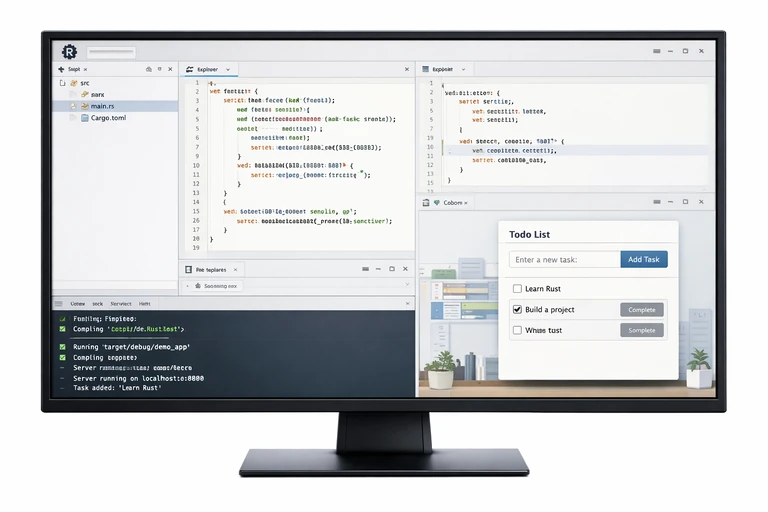
Rust Eğitimi, dilin güçlü güvenlik garantilerini günlük geliştirmede avantaja dönüştürmeyi öğretir. Katılımcılar, derleyicinin sunduğu kontrolleri anlayarak hem güvenli hem hızlı kod yazma alışkanlığı edinir.
Bu Rust kursu, belleğin nasıl yönetildiğini ve hataların nasıl açıkça ele alınacağını adım adım netleştirir. Katılımcılar; performans gerektiren işlerden modern uygulama geliştirmeye kadar farklı alanlarda Rust'ı rahatça ve güvenle kullanmaya yetkinleşir, konuları pekiştirmek için resmi Rust kitabından yararlanabilir.
Rust eğitimini şirketinize özel planlayalım. 0212 951 0608 · Teklif isteyin
Katılımcı Profili
Bu eğitim, Rust'ın "compiler düşmanım" hissinden çıkartıp dilin güvenlik garantilerini avantaja çevirmek isteyen rollere yöneliktir:
- Sistem Programcıları: Bellek güvenli ve hızlı kod yazan mühendisler
- Backend Mühendisleri: Yüksek performans hedefiyle Rust kullanan roller
- Gömülü Geliştiriciler: no_std ile bare metal yazan ekipler
- C/C++ Geliştiriciler: Bellek güvenli alternatif arayan mühendisler
- WebAssembly Geliştiricileri: Wasm hedefiyle Rust kullanan ekipler
Ön Gereklilikler
Bu eğitime katılım için aşağıdaki ön bilgiler önerilir:
- C, C++ veya başka bir sistem dilinde geliştirme deneyimi (tercihen)
- Pointer, referans ve memory model kavramlarına aşinalık
- OOP veya fonksiyonel programlama yaklaşımına giriş düzeyi bilgi
- Komut satırı (cargo) ile rahat çalışma
- Git ile sürüm kontrol akışı bilgisi
Süresi ve Tarihi
Süre: 4 gün. Bu süre standart program içindir; ek modüllere ve hedefe göre süre özelleştirilebilir.
Eğitim tarihleri ve saatleri, ekibinizin uygunluğuna göre birlikte planlanır.
Kazanımlar
Bu eğitim sonunda katılımcı, Rust'ın "compiler düşmanım" hissinden çıkıp dilin güvenlik garantilerini avantaja çevirir:
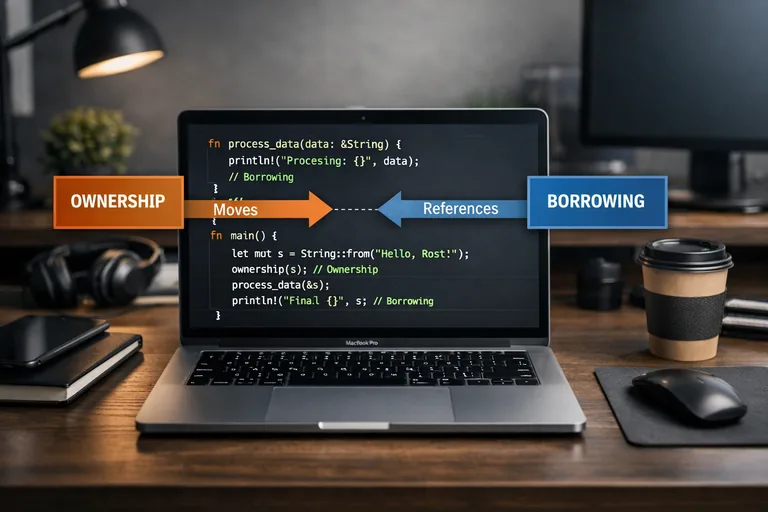
- Ownership ve borrow checker'ı sezgisel açıklar
- Lifetime ('a) ile referans güvenliğini doğru ifade eder
- Result ve Option ile exception'sız hata yönetimi yapar
- Trait ile generic ve dyn dispatch arasında karar verir
- async/await ve tokio ile asenkron programlama kurar
- Cargo ile dependency, workspace ve feature flag yönetir
- unsafe Rust ile FFI; C/C++ ile interop tasarlar
Rust Eğitimi Konuları
1. Rust Felsefesi - Safety, Speed, Concurrency
- Sıfır maliyetli soyutlamalar
- Memory safety: GC olmadan
- Edition modeli (2015, 2018, 2021, 2024)
- rustup, cargo, rustc
2. Cargo - Build ve Paket Yöneticisi
- Cargo.toml ve Cargo.lock
- crates.io ve docs.rs
- Workspace ile multi-crate
- Profile: dev, release
- cargo run, build, test, doc, clippy, fmt
3. Ownership ve Move Semantics
- Her değerin tek bir owner'ı vardır
- Move vs copy
- Scope ve drop
- String vs &str
4. Borrowing ve Reference
- Immutable reference (&T)
- Mutable reference (&mut T)
- Borrowing kuralları
- Dangling reference önleme
- NLL (Non-Lexical Lifetimes)
5. Lifetime
- Lifetime annotation ('a)
- Lifetime elision rule
- Static lifetime ('static)
- Struct ve method lifetime
6. Struct, Enum, Pattern Matching
- Struct: named, tuple, unit
- Enum ve algebraic data type
- match expression ve exhaustiveness
- if let ve while let
- Destructuring
7. Trait ve Generic
- Trait tanımı ve impl Trait for Type
- Default method
- Trait bound ve where clause
- Generic function ve struct
- Dynamic dispatch (dyn Trait)
8. Error Handling - Result, Option
- Option<T>: Some, None
- Result<T, E>: Ok, Err
- ? operator ile propagation
- thiserror ve anyhow crate
- panic! ve unrecoverable error
9. Smart Pointer - Box, Rc, Arc, RefCell
- Box<T> ile heap allocation
- Rc<T> reference counting (single-thread)
- Arc<T> atomic reference counting
- RefCell<T> interior mutability
- Mutex<T> ve RwLock<T>
10. Closure ve Iterator
- Fn, FnMut, FnOnce trait
- move closure
- Iterator trait ve adaptor
- Zero-cost iterator
- collect, filter, map, fold
11. Collection - Vec, HashMap, BTreeMap
- Vec<T> dynamic array
- HashMap<K, V>
- BTreeMap ve sorted map
- VecDeque ve LinkedList
- String ve OsString
12. Concurrency - Thread ve Channel
- std::thread::spawn
- mpsc channel ile message passing
- Send ve Sync marker trait
- Crossbeam ve rayon crate
- Data race önleme
13. Async/Await - Tokio
- async fn ve Future trait
- .await operatörü
- Tokio runtime
- tokio::spawn ve task
- async ekosistem: hyper, reqwest
14. Macro - Declarative ve Procedural
- macro_rules! ile declarative macro
- Procedural macro: derive, attribute
- quote ve syn crate
- println!, vec!, format! örnekleri
15. Unsafe Rust ve FFI
- unsafe block ve raw pointer
- extern "C" ile FFI
- bindgen ile C binding
- cbindgen ile C header üretme
- Soundness ve invariant
16. Testing ve Documentation
- #[test] ve cargo test
- Integration test (tests/ klasörü)
- Doc-test ile örnek doğrulama
- Property-based test: proptest
- Benchmark: criterion
17. Web Framework - Axum, Actix-web
- Axum ile Tokio uyumlu API
- Actix-web ve aktör model
- Rocket ve Warp alternatif
- SQLx ve Diesel ORM
- Serde ile serialization
18. Embedded ve no_std
- no_std ile bare metal
- embedded-hal ile donanım soyutlama
- Cortex-M, ESP32, RP2040 desteği
- Probe-rs ile flashing ve debugging
RUST EĞİTİMİ ile İlgili
Sıkça Sorulan Sorular ve Cevapları
Rust eğitimini kurumumuza özel planlayabilir miyiz?
Evet. Rust eğitimini tamamen kurumunuza özel planlıyoruz; konu kapsamı ve takvim, hedeflerinize ve katılımcı kadronuzun uygunluğuna göre birlikte şekillenir.
Rust eğitimini hangi illerde veriyorsunuz?
Rust eğitimini firmanızın bulunduğu yerde, kendi ofisinizde yerinde vermekteyiz; İstanbul, Ankara ve İzmir başta olmak üzere Türkiye'nin tüm illerine gelmekteyiz. Tercih eden kurumlara eğitimi canlı online olarak da sunmaktayız.
Rust eğitimini online veriyor musunuz?
Evet. Rust eğitimini canlı online formatta da vermekteyiz; ekran paylaşımı ve uygulamalı oturumlarla Türkiye'nin her ilinden katılım sağlanabilir. İçerik ve takvim yine kurumunuzun ihtiyacına göre planlanır.
Rust eğitimi çalışanlarımızın seviyesine göre uyarlanıyor mu?
Evet. Eğitimin başında, ihtiyacınıza bağlı olarak bir seviye tespiti yapmakta ve katılımcıların mevcut bilgisine göre ilerlemekteyiz. Böylece konuya yeni başlayanlar da, deneyimli olanlar da aynı eğitimden verim alır.
Rust eğitimi projemiz üzerinden ilerleyebilir mi?
Eğitim, kendi projeniz veya kullanım senaryonuz üzerinden ilerleyebilir. Bunun için teklif öncesinde projenizi bize iletmeniz ya da tarif etmeniz gerekmektedir; böylece eğitimi gerçek işinize göre kurgularız.
Rust eğitmenleriniz hakkında bilgi alabilir miyiz?
Eğitmenlerimiz yazılım geliştirme alanında sahada deneyimli, Rust ile gerçek projeler geliştirmiş yazılımcılardır. İhtiyacınıza ve hedefinize en uygun eğitmeni sizinle eşleştiriyoruz.
Katılımcılarımıza sertifika veriliyor mu?
Evet. Eğitimi tamamlayan katılımcılarımıza katılım sertifikası vermekteyiz. Sertifika, eğitimin adını ve katılımcının bilgilerini içerir; kurumunuzun talebine göre dijital veya basılı olarak iletilir.
Rust eğitiminin fiyatı ne kadar?
Rust eğitimi kurumlara özel planlandığı için sabit liste fiyatı yoktur. İstekleriniz ve kapsam doğrultusunda bir teklif hazırlayıp fiyatla birlikte size iletmekteyiz.
Rust eğitim planınızı ekibinize göre birlikte netleştirelim.
0212 951 0608 · Kurumsal teklif